Aluminium Gravity Die Castings for Precision-Driven Industries
Explore gravity die casting solutions for custom aluminium components designed around your product requirements.
Product overview
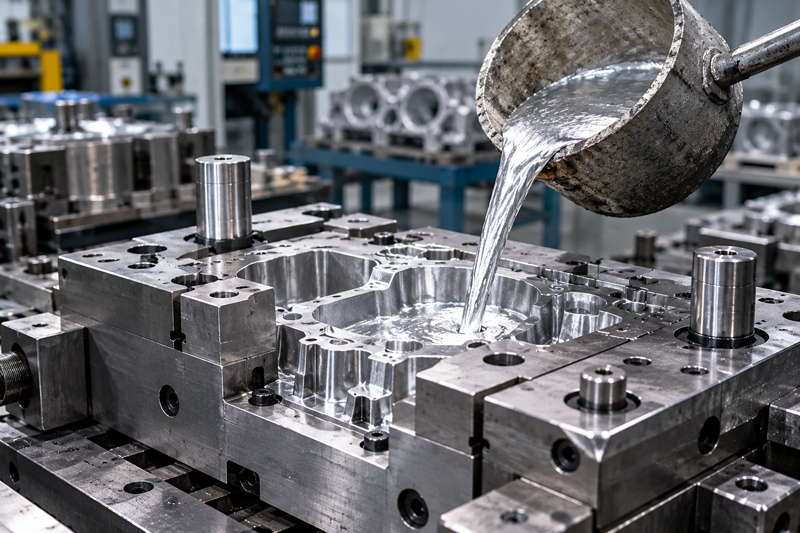
Aluminium Gravity Die Casting is a manufacturing process that uses reusable metal moulds or dies to produce high quality aluminium components. In this process, molten aluminium is poured into a permanent metal mould and allowed to flow naturally under the force of gravity without the use of external pressure. The molten aluminium takes the shape of the mould cavity as it solidifies. The resulting castings are widely used for manufacturing precision aluminium components across automotive and engineering applications. This process is particularly suitable for producing small and medium production batches with consistent quality and reduced costs.
Aluminium Gravity Die Casting is widely used for manufacturing components for automotive systems, electrical fittings, pump and valve bodies and various engineering applications where lightweight and durable materials are preferred. Industries prefer this manufacturing process for producing aluminium castings that offer strength, corrosion resistance and good heat transfer properties. Gravity die casting of aluminium remains a preferred manufacturing process for applications that require lightweight, corrosion-resistant and dimensionally accurate components.
What is aluminium gravity die casting?
How the process works (general information)
Molten aluminium is poured into a reusable metal mould, also called a die or permanent mould. It flows into the cavity under gravity alone, with no applied pressure, and solidifies into the required shape. The casting is then removed, trimmed and, if needed, machined.
Because the metal fills the mould gently, gas entrapment can be lower than in high-pressure processes. Results still depend on the component design, the alloy and how the tool is built.
What Sairam Aluminium offers (company capability)
- In-house design and fabrication of steel moulds
- Gravity die casting machines in our foundry
- Alloy grades such as A356, LM6, LM25 and LM24, as per application
- Trimming, fettling, CNC machining and finishing
- Inspection before dispatch
What our casting service covers
Dimensional accuracy
Repeatable dimensions across a production batch, subject to the design.
Reusable steel moulds
Permanent tooling supports efficient small and medium volume runs.
Built to your drawing
Components follow customer-approved drawings and specifications.
Inspection before dispatch
Every component goes through quality inspection before it ships.
Machining support
Secondary machining and surface finishing as required.
Planned delivery
Production planning is aimed at timely project execution.
Manufacturing process
How a casting moves through our facility, from reviewing your drawing to inspection and dispatch.
1. Customer Requirements & Drawing Review
Your drawings, dimensions and application needs are reviewed so the casting route is agreed before tooling starts.
2. Tooling and Die Development
Precision steel moulds are designed and fabricated in-house to suit the component.
3. Aluminium Gravity Die Casting
Molten aluminium alloy is poured into the permanent mould and fills the cavity under gravity.
4. Trimming and Finishing
After controlled cooling, castings are de-moulded, trimmed and fettled.
5. CNC Machining, Where Required
Machined features and finishing are completed to your specification.
6. Quality Inspection and Dispatch
Components are inspected before they leave the plant.
Key advantages of gravity die casting
These are the benefits the process is generally valued for. How far each applies depends on the component geometry, alloy and tooling.
High dimensional accuracy
Can produce precise, consistent dimensions across batches.
Smooth surface finish
A good as-cast finish can reduce extensive machining and finishing.
Good mechanical properties
Strength, durability and structural integrity for demanding duty.
Cost-effective tooling
Reusable moulds help production efficiency for small to medium volumes.
Design flexibility
Complex shapes and thin-walled sections are possible.
Reduced porosity
Gravity-fed metal flow limits gas entrapment, giving dense castings.
Corrosion resistance
Aluminium castings suit industrial and outdoor environments.
Aluminium Gravity Die Casting Expertise
Send us your drawings and tell us what the part has to do. Dimensions, alloy requirements, machining and finishing can all be discussed with the engineering team, subject to our actual capabilities.
- Customer-approved drawings and dimensional specifications
- Alloy grade matched to the application (A356, LM6, LM25, LM24 and others)
- Machining and surface finishing where the part requires it
- Quantities and delivery planning discussed upfront
Applications and industries
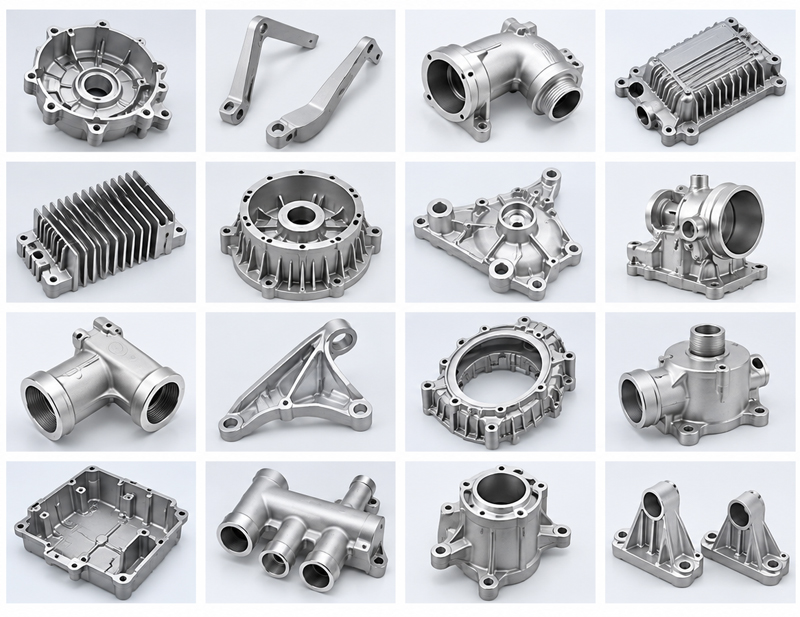
Gravity die castings are used where lightweight, corrosion-resistant and dimensionally accurate parts are needed. Industries we serve include:
Automotive
Engine brackets, gearbox housings, wheels
Electrical & Electronics
Enclosures and fittings
Pumps & Valves
Pump and valve components
Industrial Machinery
Machinery components
Marine
Industry we serve
Agricultural Equipment
Agricultural equipment parts
Railways
Railway components
Renewable Energy
Industry we serve
Defence
Defence components
General Engineering
Industry we serve
Machining and finishing
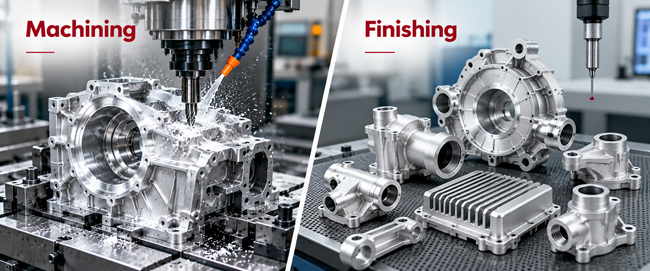
Castings can be taken through trimming, fettling and CNC machining in-house, with surface finishing as required. Our machining infrastructure includes CNC and VMC machines.
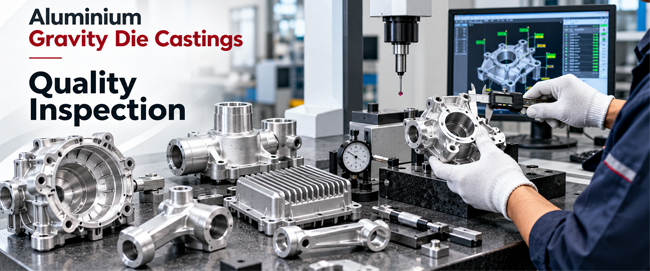
Quality inspection
Inspection is part of the process, not an afterthought. Components are inspected before dispatch, supported by a batch production system and a quality control system in the foundry.
Frequently asked questions
It is a casting process in which molten aluminium is poured into a reusable metal mould and fills it under gravity, with no external pressure. The casting solidifies in the shape of the cavity.
Pressure die casting forces metal into the die under high pressure. Gravity die casting relies on gravity alone, which is gentler on the metal flow and uses permanent steel moulds. Which suits a part depends on its geometry, volume and requirements.
Automotive, electrical and electronics, pumps and valves, industrial machinery, marine, agricultural equipment, railways, renewable energy, defence and general engineering are among the industries we serve.
It can offer high dimensional accuracy, a smooth surface finish, good mechanical properties, reduced porosity and corrosion resistance. Reusable moulds also help with cost for small to medium volumes.
Yes. We manufacture aluminium cast components to customer-approved drawings, dimensional specifications and application requirements.
Yes. Secondary operations such as CNC machining and surface finishing are available based on the application.
We work with a range of aluminium alloy grades, including A356, LM6, LM25 and LM24, selected according to the application. Share your requirement and the team will confirm what is suitable.
Use the form on this page or the contact page. Include your drawing, expected quantities, preferred alloy and any machining or finishing needs, and the team will respond.